Generative AI Search Engines: What Consumers Must Know
Generative AI search engines now drive 32% of online shopping queries, fundamentally changing how consumers discover and purchase products by offering personalized, conversational, and efficient experiences.
The landscape of online shopping is undergoing a profound transformation, with generative AI search engines now driving 32% of online shopping queries. This shift isn't just a technological upgrade; it's a fundamental reimagining of how consumers discover, evaluate, and purchase products online. Understanding this evolution is crucial for navigating the future of e-commerce.
The rise of generative AI in e-commerce
Generative artificial intelligence has rapidly moved from a niche technology to a mainstream force, fundamentally altering how we interact with digital platforms. In the realm of e-commerce, its impact is particularly pronounced, offering a level of personalization and interactivity previously unimaginable. This shift is not merely about finding products; it's about a conversational, intuitive journey that anticipates consumer needs and preferences.
Traditional search engines have long relied on keyword matching, returning lists of links that users then sift through. Generative AI, however, goes beyond this, understanding context, interpreting complex queries, and synthesizing information to provide direct, tailored recommendations. This capability is proving invaluable for shoppers seeking specific items or exploring broader categories without knowing the exact terminology. It's akin to having a personal shopping assistant available 24/7, capable of understanding nuanced requests and offering curated suggestions.
Understanding the mechanics of generative AI search
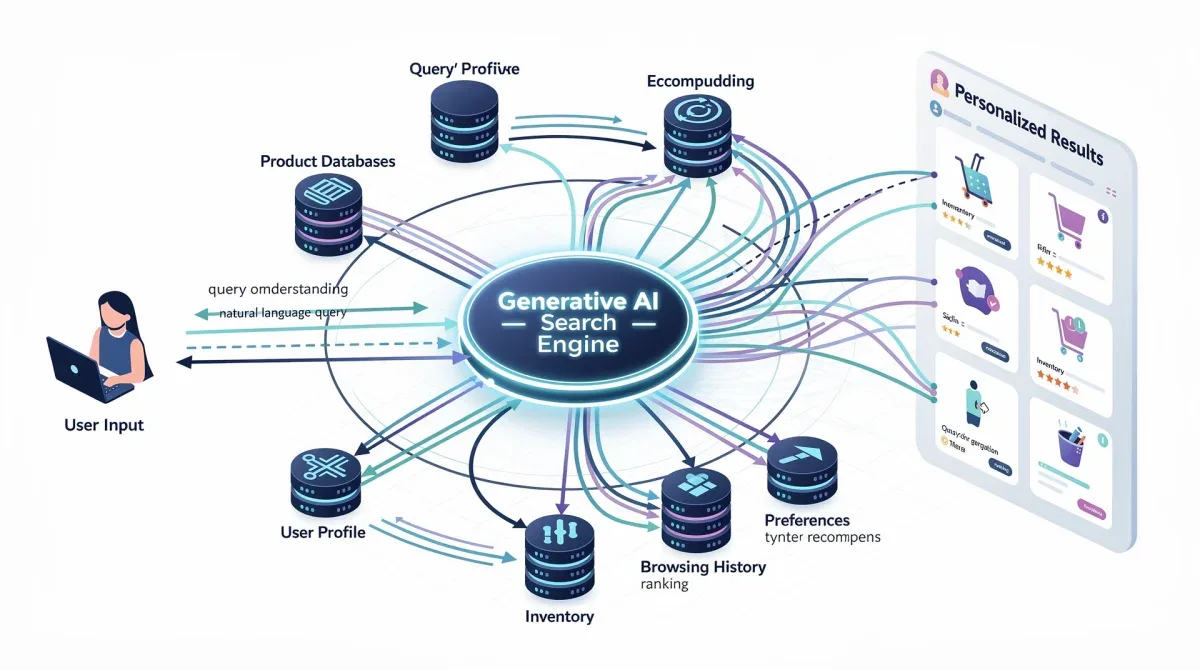
At its core, generative AI in search leverages advanced machine learning models to generate new content, whether that's text, images, or even code, in response to a user's prompt. For shopping, this means the AI can:
- Interpret natural language queries, even vague ones.
- Synthesize product information from various sources.
- Generate personalized product descriptions and comparisons.
- Offer conversational follow-ups and refine search results.
This dynamic interaction creates a more engaging and efficient shopping experience, reducing the time and effort traditionally spent navigating multiple websites and comparing endless product specifications. Consumers are no longer just searching; they are conversing with the search engine to refine their desires.

The adoption rate of generative AI in shopping queries highlights a growing consumer trust and preference for these intuitive interfaces. As the technology continues to mature, we can expect even more sophisticated interactions, further blurring the lines between searching and discovering, making the online shopping journey more seamless and enjoyable. This evolution demands that consumers become more aware of how these systems work and how to leverage them effectively.
Personalized shopping experiences: A new era
One of the most significant advantages of generative AI search engines is their ability to deliver highly personalized shopping experiences. Gone are the days of generic search results; instead, consumers are met with recommendations that feel uniquely tailored to their tastes, past purchases, and expressed preferences. This level of customization transforms the often-overwhelming task of online shopping into a more focused and enjoyable activity.
Generative AI algorithms analyze vast amounts of data, including browsing history, purchase patterns, demographic information, and even real-time interactions, to create a comprehensive profile of each user. This profile then informs the AI's responses, ensuring that the suggested products are not only relevant but also align with the consumer's individual style and budget. The result is a shopping journey that feels less like a hunt and more like a guided exploration.

Consider a scenario where a user asks for 'a sustainable summer dress for a beach wedding.' A traditional search might return thousands of results, requiring extensive filtering. A generative AI search, however, could instantly provide a curated selection, perhaps even suggesting specific brands known for sustainability, fabrics suitable for warm weather, and styles appropriate for a wedding, all while considering the user's previously indicated preferences for color or fit. This efficiency is a game-changer.
The role of conversational AI in product discovery
The conversational aspect of generative AI is particularly potent in enhancing product discovery. Users can engage in a dialogue with the search engine, refining their needs and exploring options in a natural, human-like way. This iterative process allows for a deeper understanding of the consumer's intent, leading to more accurate and satisfying recommendations. For instance, after receiving initial suggestions, a user might ask:
- 'Can you show me options in a different price range?'
- 'What about similar styles but with long sleeves?'
- 'Are there any reviews for this brand's ethical practices?'
Such nuanced follow-up questions would be difficult for traditional search engines to process effectively, but generative AI thrives on this back-and-forth. It learns from each interaction, continuously improving its ability to serve the user. This dynamic interaction fosters a sense of being understood and catered to, making the shopping experience far more intuitive and less frustrating. The promise of truly personalized shopping is now a reality, driven by these intelligent systems.
Navigating data privacy and security concerns
As generative AI search engines become more integrated into our online shopping habits, the issue of data privacy and security becomes increasingly critical. These systems rely heavily on collecting and processing vast amounts of personal data to deliver personalized experiences. While beneficial for tailored recommendations, this raises important questions about how consumer information is being used, stored, and protected.
Consumers must be aware that every interaction, every query, and every click contributes to a data profile that the AI uses to refine its understanding of their preferences. This data can include browsing history, location, demographic details, purchase records, and even sentiment extracted from conversational inputs. While this enables personalization, it also means that sensitive information is being collected, making understanding privacy policies paramount.
Protecting your personal information
To safeguard personal data when using generative AI search for shopping, consumers should adopt several proactive measures. It's not enough to simply trust that platforms are handling data responsibly; active engagement is required. Key steps include:
- Reviewing privacy policies: Understand what data is collected, how it's used, and whether it's shared with third parties.
- Adjusting privacy settings: Many platforms offer options to limit data collection or personalize ad experiences.
- Using strong, unique passwords: Essential for protecting accounts across all online services.
- Being mindful of information shared: Avoid disclosing overly sensitive personal details in search queries.
Furthermore, consumers should be vigilant about phishing attempts and scams that might leverage AI-generated content to appear legitimate. The sophistication of AI can make it harder to distinguish authentic communications from fraudulent ones, necessitating a heightened sense of caution. Regularly clearing cookies and browsing data can also help manage the digital footprint left behind.
The balance between convenience and privacy is a delicate one. While generative AI offers unparalleled shopping ease, consumers must remain informed and proactive in managing their digital identities. Understanding the data ecosystem and exercising control over personal information is essential for a secure and beneficial online shopping experience in the age of AI.
The impact on consumer behavior and decision-making
The integration of generative AI into online shopping queries is not merely changing the mechanics of search; it is profoundly influencing consumer behavior and decision-making processes. With AI acting as an intelligent intermediary, the traditional path from product discovery to purchase is being reshaped, leading to both efficiencies and new considerations for shoppers.
Consumers are increasingly relying on AI for curated information, trusting its ability to synthesize complex data and present optimal choices. This trust can streamline decision-making, as the AI often pre-filters options based on perceived needs and preferences. However, it also means that consumers might be exposed to a narrower range of products or perspectives, potentially limiting their discovery of truly novel or unconventional items outside the AI's algorithmic scope.
Benefits of AI-driven decision support
The advantages of having AI assist in shopping decisions are numerous. They include:
- Reduced cognitive load: AI processes vast amounts of information, saving consumers time and effort.
- Faster decision cycles: Tailored recommendations can accelerate the path to purchase.
- Improved product fit: Personalization leads to products that better match individual needs.
- Access to comprehensive comparisons: AI can quickly compare features, prices, and reviews across multiple vendors.
This efficiency allows consumers to focus on higher-level decision criteria, rather than getting bogged down in minutiae. For instance, instead of spending hours researching specifications for a new laptop, an AI can quickly present top contenders based on budget, usage, and preferred brands, allowing the consumer to then delve into specific user reviews or warranty details.
However, consumers must also exercise critical thinking, remembering that AI recommendations are based on algorithms and collected data, not infallible judgment. It is crucial to cross-reference information, read independent reviews, and maintain a healthy skepticism, especially for significant purchases. The AI is a powerful tool, but the ultimate decision rests with the human, ensuring a balanced approach to modern shopping.
Ethical considerations and bias in AI recommendations
As generative AI plays an ever-larger role in influencing consumer choices, it becomes imperative to address the ethical considerations and potential biases embedded within these systems. AI models are trained on vast datasets, and if these datasets contain historical biases or reflect societal inequalities, the AI can inadvertently perpetuate or amplify them in its recommendations. This can lead to unfair or discriminatory outcomes for consumers.
Bias can manifest in various ways, such as favoring certain brands or product categories, excluding specific demographics from recommendations, or even subtly influencing purchasing decisions based on non-transparent criteria. For example, if an AI is predominantly trained on data from a particular demographic, its recommendations might not accurately reflect the needs or preferences of other groups, leading to a less inclusive shopping experience.
Addressing algorithmic bias for fair shopping
To mitigate the risks of algorithmic bias and ensure fair shopping experiences, several strategies are being developed and implemented. Consumers also have a role to play in recognizing and questioning potentially biased recommendations. Key areas of focus include:
- Diverse training data: Ensuring AI models are trained on datasets that represent a wide range of demographics and preferences.
- Algorithmic transparency: Developing systems that can explain why certain recommendations were made.
- Regular auditing: Continuously evaluating AI outputs for fairness and identifying any emerging biases.
- User feedback mechanisms: Allowing consumers to report biased or irrelevant recommendations.
Companies developing and deploying generative AI in e-commerce have a responsibility to design these systems with ethical principles at their core. This involves not only technical solutions but also a commitment to ongoing review and improvement. For consumers, being aware that AI is not inherently neutral and actively seeking diverse sources of information can help counteract potential biases and ensure more equitable and informed purchasing decisions. It's a collective effort to shape a more responsible AI future.
Tips for consumers: Maximizing your AI shopping experience
With generative AI search engines becoming a dominant force in online shopping, consumers have a unique opportunity to enhance their purchasing experiences. By understanding how these intelligent tools work and adopting specific strategies, shoppers can maximize the benefits, find better deals, and make more informed decisions. It's about learning to speak the AI's language and leveraging its capabilities effectively.
The key lies in engaging with the AI proactively and intelligently. Think of it less as a passive search bar and more as an active, conversational partner. The more precise and context-rich your queries, the better the AI can understand your intent and deliver relevant results. This requires a slight shift in mindset from traditional keyword-based searching to a more natural, dialogue-driven approach.
Practical strategies for smart AI shopping
To truly get the most out of generative AI in your online shopping, consider these practical tips:
- Be specific and detailed: Instead of 'running shoes,' try 'lightweight running shoes for trail running with good ankle support.'
- Use natural language: Phrase your queries as if you're talking to a knowledgeable sales assistant.
- Ask follow-up questions: Refine your search by asking for alternatives, different price points, or specific features.
- Compare AI results with traditional searches: Don't rely solely on AI; cross-reference information for critical purchases.
- Provide feedback: If an AI recommendation is off, some platforms allow you to provide feedback, helping the system learn.
- Understand price variations: AI might prioritize certain vendors; always check for competitive pricing elsewhere.
Moreover, be aware of the potential for 'filter bubbles' where the AI primarily shows you items similar to your past preferences. Occasionally, try broader searches or explicitly ask the AI to 'show me something different' to expand your horizons. By actively managing your interaction with generative AI, you can transform it into a powerful ally in your online shopping journey, leading to more satisfying outcomes and smarter spending. This proactive engagement is key to navigating the evolving e-commerce landscape.
The future of online shopping with generative AI
The current integration of generative AI into online shopping queries, driving 32% of traffic, is merely the beginning of a much larger transformation. The future promises even more sophisticated, immersive, and predictive shopping experiences, fundamentally altering the relationship between consumers and retailers. As AI technology continues to advance, we can anticipate a landscape where shopping is not just efficient but also deeply intuitive and integrated into daily life.
Imagine a future where your smart home assistant, powered by generative AI, proactively suggests restocking household items before you even realize they're low, or recommends outfits for an upcoming event based on your calendar and local weather. This level of predictive personalization will move beyond reactive search to proactive assistance, making shopping an almost invisible, seamless part of existence. The lines between physical and digital shopping experiences will also blur further, with AI facilitating augmented reality try-ons and virtual store explorations.
Anticipating advanced AI shopping features
Looking ahead, several advanced features powered by generative AI are likely to become commonplace:
- Hyper-personalized product creation: AI assisting in designing custom products based on individual specifications.
- Dynamic pricing and negotiation: AI agents negotiating prices on behalf of consumers or identifying optimal purchase times.
- Emotional intelligence in recommendations: AI understanding user mood or context to suggest products that genuinely resonate.
- Proactive problem-solving: AI identifying potential issues with products before purchase, such as compatibility or durability.
The development of these features will depend heavily on advancements in natural language understanding, multimodal AI (processing text, image, and voice), and ethical AI frameworks. The goal is to create an AI that not only understands what you want but also anticipates what you might need and desire, making the shopping experience effortless and truly anticipatory. This evolution will require continuous adaptation from both consumers and businesses to fully harness the potential of AI.
Ultimately, the future of online shopping with generative AI is one of unparalleled convenience and customization. However, it will also demand a more discerning consumer, one who understands the technology's capabilities and limitations, and who actively participates in shaping their AI-driven shopping journey. The transition will be dynamic, exciting, and filled with new opportunities for everyone involved in the e-commerce ecosystem.
| Key Aspect | Consumer Impact |
|---|---|
| Personalization | Tailored product recommendations, conversational discovery. |
| Data Privacy | Increased data collection, need for vigilance and privacy settings. |
| Decision-Making | Streamlined choices, but requires critical evaluation of AI suggestions. |
| Ethical AI | Awareness of potential biases in recommendations and importance of diverse data. |
Frequently asked questions about AI shopping
How do generative AI search engines personalize my shopping experience?▼Generative AI personalizes shopping by analyzing your browsing history, past purchases, and real-time queries. It uses this data to understand your preferences, anticipate needs, and generate tailored product recommendations, descriptions, and comparisons, making the experience highly relevant to your individual taste and budget.
What are the main privacy risks when using AI for online shopping?▼The main privacy risks involve the extensive collection of personal data, including browsing, location, and purchase history. This data, if not properly secured, could be vulnerable to breaches or misused. Consumers should review privacy policies and adjust settings to manage their digital footprint effectively.
Can generative AI search engines influence my purchasing decisions unfairly?▼Yes, AI can subtly influence decisions through algorithmic biases, potentially favoring certain brands or product types based on its training data. Consumers should maintain critical thinking, cross-reference AI recommendations with independent reviews, and be aware that AI is not inherently neutral to ensure fair and informed choices.
What steps can I take to maximize my AI shopping experience?▼To maximize your AI shopping experience, be specific and detailed in your queries, use natural language, and ask follow-up questions to refine results. Compare AI suggestions with traditional searches, provide feedback to improve the AI's learning, and always check competitive pricing to ensure you're getting the best value.
How will generative AI continue to evolve online shopping in the future?▼Generative AI is expected to bring hyper-personalization, proactive product suggestions, and immersive experiences like AR try-ons. It may also facilitate dynamic pricing and even assist in custom product creation. The future promises a more intuitive, predictive, and seamless integration of shopping into daily life.
Conclusion
The integration of generative AI into online shopping queries marks a significant milestone in e-commerce, fundamentally reshaping how consumers interact with digital marketplaces. While offering unprecedented personalization and efficiency, this evolution also brings forth critical considerations regarding data privacy, algorithmic bias, and the need for informed decision-making. As generative AI continues its rapid advancement, consumers must remain vigilant, proactive, and critically engaged to harness its benefits responsibly. The future of online shopping is undeniably intelligent, demanding a smarter, more aware consumer to navigate its complexities and opportunities effectively.
