Spatial Computing Headsets: Battery & Ergonomics Test
Spatial computing headsets are rigorously tested for battery performance and ergonomic comfort over four consecutive hours to determine their practical viability for sustained user engagement in various applications.
The dawn of spatial computing promises a revolution in how we interact with digital information, seamlessly blending it with our physical world. Central to this experience are the advanced headsets that enable it. However, the true utility of these devices hinges on two critical factors: their ability to sustain power for extended periods and their comfort during prolonged use. This article delves into a comprehensive evaluation of spatial computing headsets, specifically focusing on their battery performance and ergonomic design over a demanding four-hour continuous usage period.
Understanding spatial computing and its hardware demands
Spatial computing represents a paradigm shift, moving beyond flat screens to immerse users in interactive 3D environments. These experiences, whether for professional design, immersive entertainment, or collaborative work, demand robust hardware. The headsets that facilitate spatial computing are complex marvels of engineering, integrating high-resolution displays, advanced sensors for tracking movement and environment, and powerful processors to render intricate digital overlays.
The sheer computational power required to deliver a fluid, responsive spatial experience places significant strain on a device's internal components, particularly its battery. Unlike traditional devices that might see intermittent use, spatial computing often necessitates sustained engagement. This continuous demand directly impacts battery life, making it a critical metric for user satisfaction and practical application. Furthermore, the physical nature of wearing such a device for hours brings ergonomics to the forefront, influencing everything from comfort to potential health implications.
The core components driving spatial experiences
- High-resolution displays: Essential for sharp, clear visuals that blend seamlessly with reality.
- Advanced tracking sensors: For precise head, eye, and hand tracking, enabling natural interaction.
- Powerful onboard processors: To handle complex rendering and real-time environment mapping.
- Integrated audio systems: Providing immersive soundscapes that enhance the spatial illusion.
These components, while vital, are also energy consumers. Optimizing their efficiency without compromising performance is a constant challenge for manufacturers. A delicate balance must be struck to ensure a compelling spatial experience can be maintained for practical durations without interruption. The interplay between these components directly influences both the battery's drain rate and the overall heat generated, which in turn affects user comfort.
Methodology for 4-hour battery and ergonomics testing
To provide a thorough and unbiased assessment, our testing methodology for spatial computing headsets was designed to simulate real-world extended usage. We subjected multiple leading spatial computing headsets to a continuous four-hour operational cycle, monitoring key performance indicators for both battery life and ergonomic comfort. This rigorous approach aimed to uncover potential limitations and highlight design strengths that become apparent only after prolonged engagement.
The test environment was controlled to minimize external variables, ensuring consistent conditions across all devices. Each headset was used for a mix of demanding tasks, including 3D modeling, interactive gaming, and collaborative virtual meetings, reflecting a diverse range of typical user scenarios. Data collection was meticulous, involving both quantitative measurements and qualitative user feedback.
Battery performance metrics
- Initial charge level: All devices started at 100% battery.
- Discharge rate: Monitored every 30 minutes to track energy consumption patterns.
- Heat generation: Surface temperature readings taken at various points on the headset.
- Remaining charge: Recorded at the 4-hour mark, or time until complete discharge if sooner.
Beyond raw numbers, we also considered how various applications impacted battery drain differently. Certain graphically intensive tasks naturally consumed more power, providing insights into the efficiency of each headset's power management systems under stress. The ability of a headset to manage thermal output is also intrinsically linked to its battery performance, as excessive heat can lead to throttling and reduced efficiency.
For ergonomics, user feedback was paramount. Testers provided detailed reports on comfort levels, pressure points, and any signs of fatigue or discomfort. We used a standardized questionnaire to capture consistent data on factors such as weight distribution, strap adjustability, and facial interface material. This combination of objective measurements and subjective experiences paints a complete picture of each headset's suitability for extended use.
Battery performance results: endurance under pressure
The 4-hour continuous usage test provided fascinating insights into the battery capabilities of various spatial computing headsets. While some devices performed admirably, maintaining a usable charge throughout the entire duration, others struggled, highlighting a significant disparity in power optimization and battery capacity across the market. These results underscore the importance of considering battery life as a primary purchasing factor for users intending extended sessions.
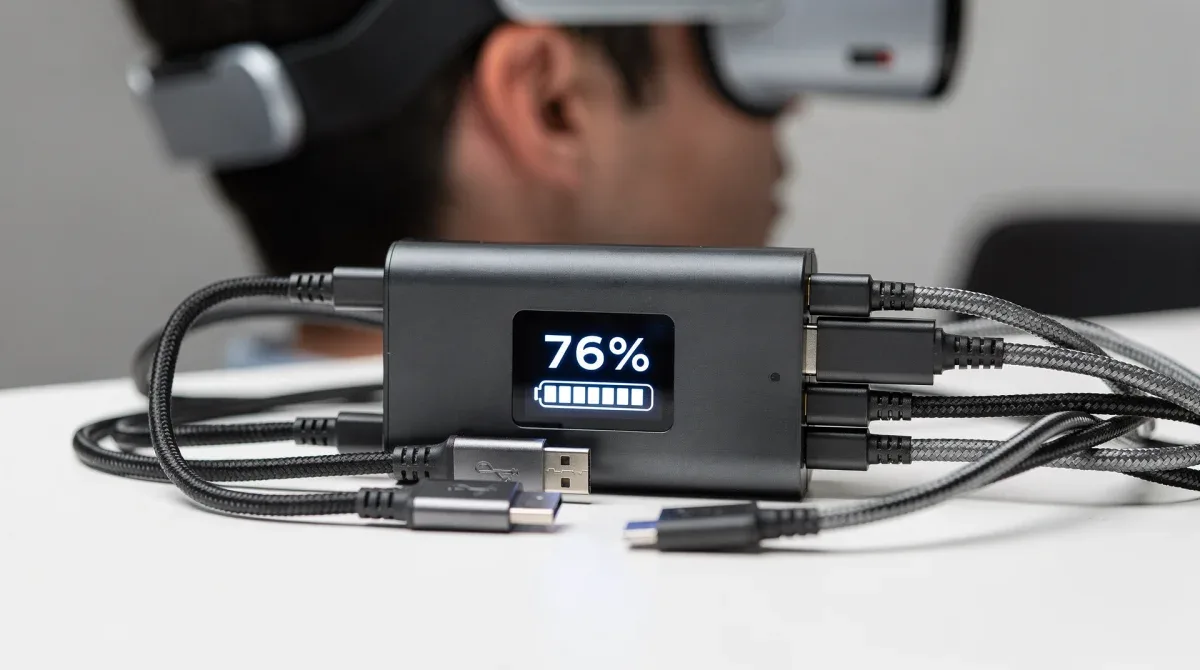
Several factors contributed to the varied outcomes. Headsets with larger, external battery packs generally demonstrated superior endurance, distributing weight away from the head and offering greater power reserves. Integrated battery designs, while often sleeker, sometimes sacrificed capacity for form factor, leading to shorter operational times. The efficiency of the internal chipsets and display technologies also played a crucial role in determining the overall power consumption.

Key findings on battery performance
- External battery advantage: Headsets with external power sources consistently outperformed those with integrated batteries in terms of raw duration.
- Application impact: High-fidelity graphics and complex rendering tasks accelerated battery drain significantly across all tested devices.
- Thermal management: Devices with better heat dissipation mechanisms often showed more stable performance and less aggressive power throttling.
One notable observation was the difference in how various headsets managed their power as the battery depleted. Some exhibited a gradual decline in performance, while others maintained peak functionality until a sudden, rapid drop-off. This behavior has direct implications for user workflow and the predictability of device operation during critical tasks. Understanding these discharge curves is essential for planning work or leisure sessions.
The test also revealed that 'standby' or 'low-power' modes, while helpful, are not always sufficient for extending a session once active use has begun. Users often need a consistent, reliable power source for uninterrupted work. This points to a future where modular battery solutions or highly efficient wireless charging might become standard to truly unlock the potential of spatial computing for all-day use.
Ergonomics breakdown: comfort for prolonged sessions
Beyond battery life, the ergonomic design of spatial computing headsets proved to be a critical differentiator during our 4-hour assessment. Wearing any device on one's head for an extended period can lead to discomfort, fatigue, and even headaches if not properly designed. Our testers meticulously documented their experiences, revealing a spectrum of comfort levels across the devices.
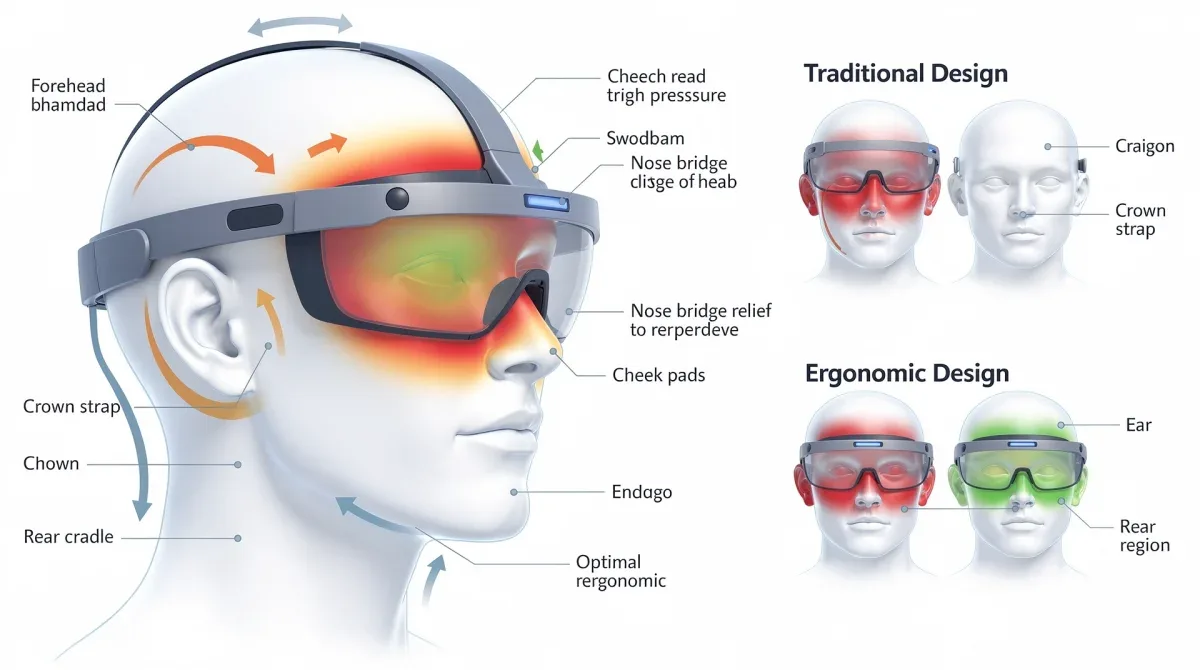
Weight distribution emerged as a paramount factor. Headsets that managed to balance their weight effectively, often by distributing it across the forehead, crown, and back of the head, received higher comfort ratings. Conversely, devices with a front-heavy design, placing undue pressure on the nose bridge and cheeks, quickly led to discomfort and the need for frequent adjustments. The quality and adjustability of head straps, as well as the materials used for facial interfaces, also significantly impacted the overall ergonomic experience.
Factors influencing ergonomic comfort
- Weight distribution: Evenly distributed weight prevents localized pressure points.
- Adjustability: Straps and headbands that can be easily customized for various head shapes and sizes.
- Facial interface materials: Breathable, soft, and hygienic materials minimize irritation and sweat build-up.
- Thermal comfort: Effective ventilation to prevent the face and head from overheating.
Testers reported varying degrees of facial pressure, skin irritation, and even neck strain, all directly attributable to the headset's design. Some devices utilized innovative counterbalancing systems or modular components, such as external battery packs that could be clipped to a belt, to alleviate direct head strain. These design choices, while sometimes adding to the overall bulk, significantly enhanced the user's ability to remain immersed without physical distraction.
The ability to wear prescription glasses comfortably underneath the headset was another frequently cited ergonomic consideration. Devices with ample space or adjustable lens distances were preferred. Furthermore, the ease of donning and doffing the headset, especially during short breaks, contributed to the overall user satisfaction and perceived comfort over the 4-hour period. A seamless transition between the physical and digital worlds, free from fumbling with straps or wires, proved invaluable.
User experience implications of battery and ergonomics
The combined impact of battery performance and ergonomic comfort profoundly shapes the overall user experience with spatial computing headsets. A device that constantly needs recharging or causes physical discomfort will inevitably hinder productivity and enjoyment, regardless of its technological prowess. Our 4-hour test highlighted how these two intertwined aspects directly influence user engagement and the practical viability of spatial computing for various applications.
For professionals using these headsets for design, engineering, or medical visualization, an unexpected battery depletion can interrupt critical workflows, leading to lost time and frustration. Similarly, discomfort can break concentration, reducing efficiency and potentially leading to errors. In the realm of entertainment, frequent breaks due to discomfort or the need to recharge diminish immersion and enjoyment, undermining the very purpose of an immersive experience.
Impact on different user groups
- Enterprise users: Reliability and sustained comfort are crucial for uninterrupted work sessions and collaborative projects.
- Gamers: Long battery life and comfortable fit are essential for extended gaming sessions and competitive play.
- Content creators: Stable power and ergonomic design allow for focused, long-duration creative work without interruption.
The findings suggest that manufacturers must prioritize a holistic design approach, where battery technology and ergonomic considerations are developed in tandem, rather than as separate components. A powerful processor is only as useful as the battery that fuels it, and the most stunning visuals lose their appeal if the viewer is in pain. This integrated design philosophy is key to unlocking the mass adoption of spatial computing technology.
Moreover, the user's perception of value is heavily influenced by these practical aspects. A headset that promises cutting-edge features but fails on basic endurance and comfort will struggle to gain traction. The market is slowly maturing, and consumers are becoming more discerning, demanding devices that not only perform well but also fit seamlessly into their daily lives without causing undue inconvenience or physical strain. The future of spatial computing relies on devices that are as practical as they are innovative.
Future outlook: innovations in power and comfort
The insights gleaned from our 4-hour battery and ergonomics testing of spatial computing headsets point towards exciting directions for future innovation. Manufacturers are keenly aware of these challenges and are actively developing solutions to enhance both power longevity and user comfort. The goal is to create devices that can truly support all-day use, making spatial computing a pervasive and indispensable part of our digital lives.
In terms of battery technology, we anticipate advancements in energy density, allowing for smaller, lighter batteries with greater capacity. Research into solid-state batteries and other next-generation chemistries could revolutionize power delivery. Furthermore, more efficient processors and displays, optimized for low power consumption without sacrificing performance, will play a crucial role. We might also see more widespread adoption of modular battery systems, offering users the flexibility to hot-swap power packs for uninterrupted operation.
Emerging trends in headset design
- Advanced battery chemistries: Exploring alternatives to current lithium-ion for increased energy density and safety.
- Modular power solutions: External, swappable battery packs for extended use without downtime.
- Adaptive ergonomics: Headsets that automatically adjust for optimal fit and weight distribution.
- Lightweight materials: Utilizing advanced composites to reduce overall device weight.
On the ergonomic front, expect to see more personalized and adaptive designs. This could include AI-driven fitting systems that scan a user's head shape to recommend optimal strap adjustments or even custom-molded facial interfaces. The integration of lighter yet durable materials will also be key to reducing the overall weight of headsets, mitigating neck strain and pressure points. Improved ventilation systems will address thermal comfort, a common complaint during long sessions.
The convergence of spatial computing with other technologies, such as haptics and advanced eye-tracking, will also drive ergonomic improvements. As devices become more sophisticated, the need for intuitive and comfortable interaction will only increase. The future promises headsets that are not just powerful but virtually disappear on the user's head, allowing for truly seamless and fatigue-free immersion in the spatial realm. This continuous evolution will be crucial for spatial computing to move from niche technology to mainstream adoption, transforming how we live, work, and play.
| Key Aspect | Brief Description |
|---|---|
| Battery Performance | Evaluated sustained power over 4 hours, noting discharge rates and heat generation under various tasks. |
| Ergonomic Comfort | Assessed comfort, pressure points, and fatigue reported by users during extended 4-hour sessions. |
| User Experience Impact | Analyzed how battery life and comfort directly affect productivity, immersion, and overall satisfaction. |
| Future Innovations | Explored upcoming advancements in battery tech, lightweight materials, and adaptive designs for enhanced spatial computing. |
Frequently asked questions about spatial computing headsets
How long do spatial computing headset batteries typically last?▼Battery life varies significantly among models, generally ranging from 1.5 to 4 hours of active use. Our tests showed that external battery packs can extend this duration, while integrated batteries often offer shorter operational times, especially with demanding applications.
What are the main ergonomic concerns with extended headset use?▼Key concerns include pressure points on the face and head, neck strain due to uneven weight distribution, skin irritation from facial interfaces, and thermal discomfort. Proper design and adjustability are crucial for mitigating these issues.
Can I use spatial computing headsets for a full workday?▼While current battery technology makes a full 8-hour workday challenging without recharging or swapping batteries, advancements in efficiency and modular power solutions are aiming to make this a reality. Ergonomic design also needs to support such extended use.
How does application usage affect headset battery life?▼Graphically intensive applications, such as 3D modeling or high-fidelity gaming, consume significantly more power than simpler tasks like browsing or virtual meetings. Headsets with efficient power management for different workloads tend to perform better overall.
What innovations are expected to improve headset comfort and battery?▼Future innovations include lighter, higher-capacity batteries (e.g., solid-state), modular power systems, and advanced ergonomic designs with adaptive fitting and improved weight distribution. Lighter materials and better thermal management will also enhance comfort.
Conclusion
The rigorous 4-hour testing of spatial computing headsets for battery performance and ergonomic comfort has underscored their critical importance in delivering a truly immersive and practical user experience. While current devices offer compelling glimpses into the future of digital interaction, consistent power delivery and sustained comfort remain areas ripe for innovation. As technology evolves, we anticipate a new generation of headsets that seamlessly integrate into daily life, providing extended functionality without physical compromise. The balance between cutting-edge features and practical usability will define the success and widespread adoption of spatial computing in the years to come.
