True Crime Saturation: Listeners Shift to Pop Culture Deep Dives
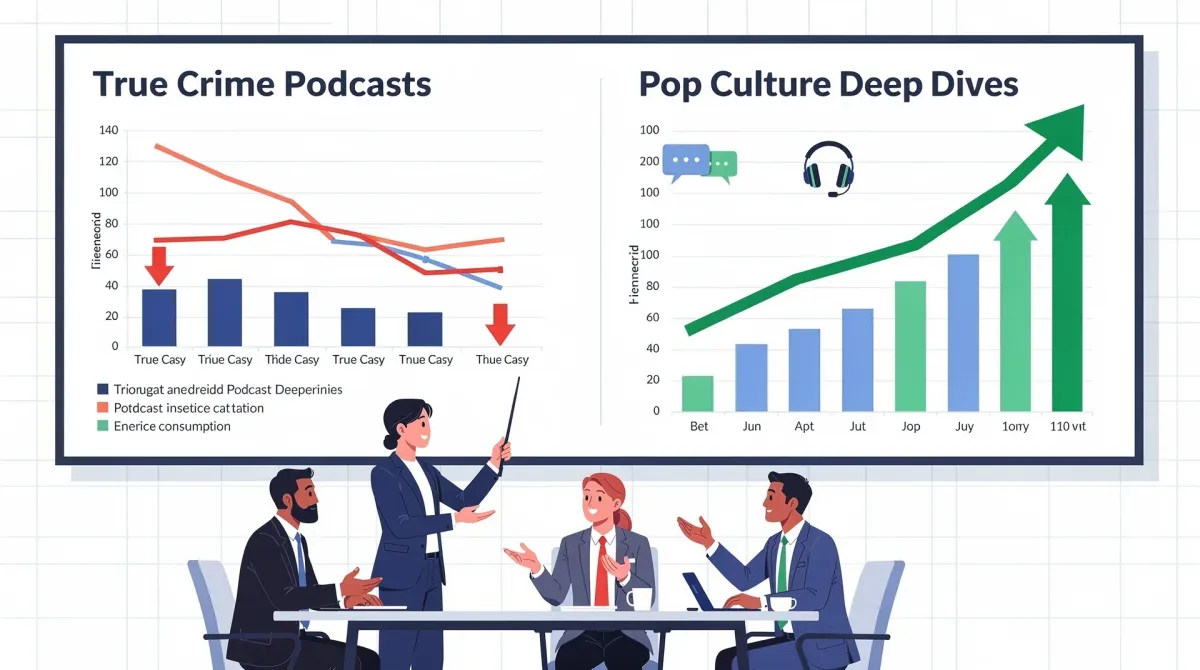
The recent phenomenon of true crime migration indicates that 35% of listeners are actively seeking out high-budget pop culture deep dives, moving away from an oversaturated genre towards more diverse and richly produced audio content experiences.
The audio landscape is constantly evolving, and a significant shift is underway: True Crime Saturation: Why 35% of Listeners Are Migrating to High-Budget Pop Culture Deep Dives. This trend suggests that a substantial portion of the audience, once captivated by criminal narratives, is now seeking new, more expansive forms of entertainment. What exactly is driving this migration, and what does it mean for the future of podcasting and digital audio content?
The rise and fall of true crime's unchallenged reign
For years, true crime dominated the podcast charts, captivating millions with its intricate narratives, investigative journalism, and often, compelling human drama. From unsolved mysteries to notorious cases, the genre offered a unique blend of entertainment and education, fostering a dedicated community of armchair detectives. However, as with any popular trend, saturation was inevitable. The sheer volume of new true crime podcasts, coupled with a growing concern over ethical considerations and repetitive storytelling, began to chip away at its once unassailable appeal.
Ethical considerations and listener fatigue
One of the primary factors contributing to the genre's decline in novelty is the increasing scrutiny over its ethical implications. Critics and listeners alike have raised questions about the exploitation of victims' stories, the sensationalization of trauma, and the potential for misinformation. This ethical dilemma has led many to seek out content that feels less morally ambiguous.
- Victim impact: Concerns about re-traumatizing victims' families.
- Sensationalism: Overemphasis on gruesome details for shock value.
- Repetitive narratives: A feeling that many stories lack originality or fresh perspectives.
- Misinformation: The spread of unverified facts in less rigorously produced shows.
Listener fatigue is another critical component. When every podcast feed seems to offer a new true crime series, the novelty wears off. Audiences, once eager for the next thrilling case, now find themselves desensitized to the format and yearning for something different. This fatigue isn't just about the quantity; it's also about the quality and depth of the storytelling. Many newer true crime podcasts struggle to differentiate themselves, leading to a homogenous listening experience that fails to engage long-term.
The initial allure of true crime lay in its ability to provide a window into the darker aspects of human nature, often combined with meticulous research and compelling narration. However, as the market became flooded, the differentiation points diminished. What once felt like a unique investigative journey now often feels like a rehashing of familiar tropes. This shift in perception is significant because it directly impacts listener loyalty and willingness to explore new genres.
Ultimately, the unchallenged reign of true crime was bound to face challenges. The very elements that made it popular—its intensity and often dark subject matter—also contributed to its eventual saturation. Listeners are intelligent and seek evolution in their entertainment, a need that the true crime genre, in its current form, struggles to consistently meet. This opens the door for other genres to capture the attention of a discerning audience.
The allure of high-budget pop culture deep dives
As true crime's appeal wanes for a segment of the audience, another genre is rapidly gaining traction: high-budget pop culture deep dives. These podcasts and audio series offer a stark contrast, providing meticulously researched, often humorous, and visually evocative explorations of everything from classic films and iconic TV shows to forgotten musical movements and internet phenomena. The appeal lies in their ability to blend academic rigor with accessible, engaging storytelling, creating an immersive experience that feels both educational and entertaining.
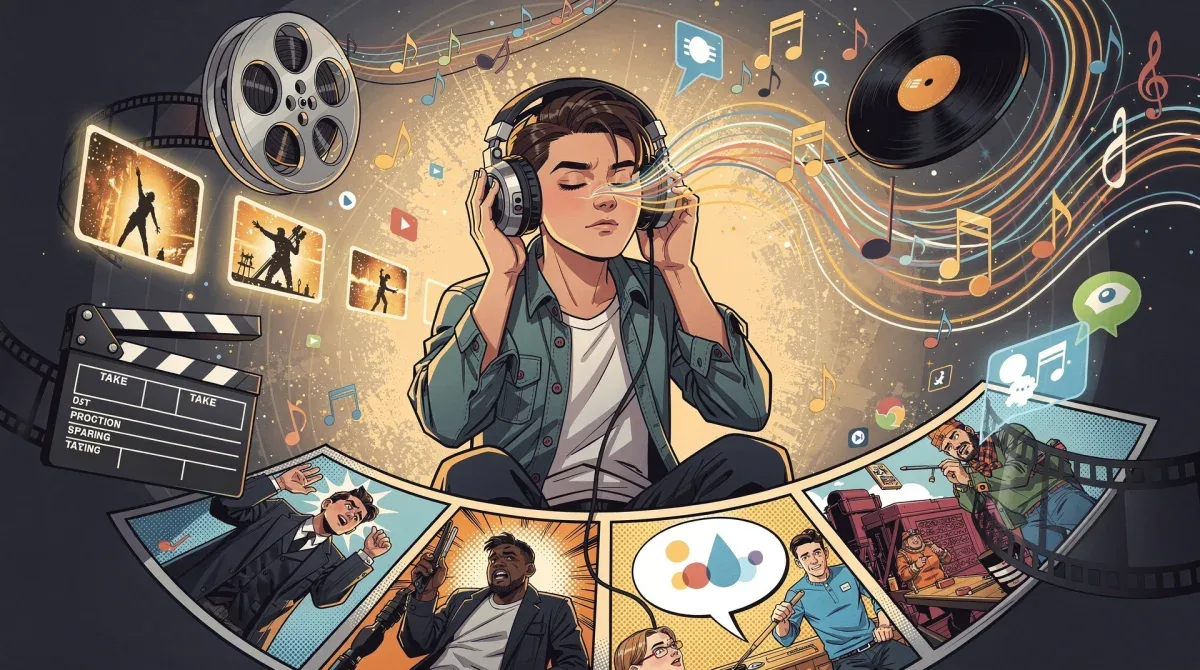
What defines a 'high-budget' pop culture deep dive? It's not just about flashy sound effects or celebrity hosts, though those can be part of it. It's about a commitment to quality in every aspect of production: extensive research, original interviews, sophisticated sound design, and narrative structures that rival documentary filmmaking. These productions often employ teams of writers, researchers, and sound engineers, creating a polished product that stands out in a crowded audio market.
Crafting immersive audio experiences
The success of these deep dives can be attributed to their dedication to crafting immersive audio experiences. Unlike many true crime podcasts that rely heavily on narration and interviews, pop culture deep dives often incorporate:
- Rich soundscapes: Using archival audio, music, and sound effects to transport listeners.
- Expert commentary: Featuring historians, critics, and creators to provide insightful analysis.
- Narrative complexity: Weaving together multiple storylines and perspectives to create a comprehensive picture.
- Humor and personality: Injecting wit and unique perspectives to keep the content engaging.
These elements combine to create an experience that is far removed from the often-somber tone of true crime. Listeners are not just passively consuming information; they are being invited on a journey of discovery, often revisiting beloved cultural touchstones with fresh eyes and ears. The production values are often so high that they elevate the content beyond mere discussion, turning it into an art form in itself.

The topics covered are incredibly diverse, reflecting the vastness of pop culture itself. One podcast might deconstruct the cultural impact of a single album, while another might explore the forgotten history of a specific film genre. This breadth of subject matter ensures that there's always something new and fascinating to explore, catering to a wide range of interests and intellectual curiosities. The feeling of being part of a shared cultural exploration is a powerful draw for many listeners.
In essence, high-budget pop culture deep dives offer a refreshing antidote to the intensity and often grim realities of true crime. They provide an escape, a form of intellectual stimulation, and a connection to shared cultural heritage, all wrapped in a beautifully produced audio package. This makes them incredibly appealing to listeners seeking both entertainment and enlightenment.
Understanding the listener migration: data and demographics
The shift of 35% of listeners from true crime to pop culture deep dives is not merely anecdotal; it's a measurable trend with significant implications for the audio industry. Data analysis reveals specific demographic groups leading this migration and sheds light on the evolving preferences that drive their choices. Understanding these patterns is crucial for content creators and platforms looking to adapt to the changing landscape of audio entertainment.
Who is migrating and why?
Initial data suggests that the migration is particularly pronounced among younger demographics, specifically millennials and Gen Z, who are often more attuned to diverse content and higher production values. These listeners grew up with a plethora of digital media and expect a certain level of sophistication and originality in their entertainment choices. They are also more likely to be early adopters of new trends and quick to move on from content that no longer resonates.
- Age group: Primarily millennials and Gen Z.
- Content expectation: High production quality and originality.
- Motivation: Seeking fresh perspectives and less intense subject matter.
- Engagement: Desire for interactive and community-driven content.
Beyond age, psychological factors play a role. After years of consuming often grim true crime stories, many listeners are actively seeking content that offers a more positive, uplifting, or intellectually stimulating experience without the emotional toll. Pop culture deep dives provide this alternative, allowing listeners to engage with complex topics in a lighter, more celebratory context.
The availability of diverse content also contributes to this migration. As more high-quality pop culture deep dives emerge, listeners have a broader array of choices, making it easier to discover new favorites. This increased competition benefits the audience, pushing creators to innovate and refine their offerings. The platforms themselves are also adapting, highlighting these emerging genres and making them more discoverable.
Furthermore, the social aspect of pop culture deep dives cannot be overlooked. Discussing a new episode about a classic film or a beloved music artist often feels more communal and less emotionally draining than dissecting a true crime case. This fosters a sense of shared experience and community, which is a powerful draw for many listeners in a world that often feels disconnected.
In summary, the listener migration is driven by a combination of demographic shifts, evolving content preferences, and the increasing availability of high-quality alternatives. It highlights a growing demand for audio content that is not only entertaining but also intellectually stimulating and emotionally rewarding, moving beyond the confines of a single, albeit once dominant, genre.
The economic impact: investment in premium audio content
The shift in listener preferences has a tangible economic impact, catalyzing significant investment in premium audio content, particularly within the pop culture deep dive genre. This increased financial backing allows for higher production values, more extensive research, and the recruitment of top-tier talent, further enhancing the appeal of these shows and accelerating the migration away from saturated genres like true crime. It's a virtuous cycle where listener demand drives investment, which in turn creates better content that attracts even more listeners.
Funding the next generation of podcasts
Major media companies and independent studios are now allocating substantial budgets to produce pop culture deep dives, recognizing their potential for broad appeal and long-term engagement. This investment manifests in several key areas:
- Talent acquisition: Hiring experienced journalists, writers, and sound designers.
- Research and development: Funding extensive archival research and original interviews.
- Marketing and distribution: Robust campaigns to reach new audiences.
- Technological advancements: Utilizing cutting-edge audio equipment and software.
This level of investment was once primarily reserved for narrative true crime or journalistic endeavors. Now, it's being channeled into exploring the cultural significance of everything from video games to fashion trends. The result is a new generation of podcasts that sound and feel like high-quality documentaries, complete with intricate sound design, original scores, and compelling narrative arcs.
Platforms like Spotify, Apple Podcasts, and Amazon Music are also playing a crucial role by investing in exclusive content and promoting these premium productions. Their algorithms and curation efforts help listeners discover these new shows, further solidifying the trend. This strategic investment is a clear indicator that the industry sees pop culture deep dives not as a fleeting trend, but as a significant and growing segment of the audio market.
The economic impact extends beyond production budgets. Successful premium podcasts can generate substantial revenue through advertising, sponsorships, and even merchandise, creating a sustainable ecosystem for creators. This financial viability encourages more creators to enter the space, fostering innovation and competition, which ultimately benefits the listener with an ever-expanding array of high-quality choices.
In conclusion, the economic landscape of podcasting is rapidly evolving, with significant capital flowing into premium pop culture content. This investment is not just about producing more shows; it's about elevating the entire audio experience, setting a new standard for quality and engagement that is increasingly difficult for lower-budget productions to match.
The evolution of storytelling: beyond crime narratives
The migration of listeners signals a broader evolution in storytelling, moving beyond the often-formulaic structures of crime narratives to embrace more complex, nuanced, and diverse forms of audio content. This evolution is driven by both creator innovation and listener demand for narratives that reflect a wider spectrum of human experience and intellectual curiosity. It's a testament to the power of audio as a medium capable of delivering rich, multifaceted stories.
Innovations in narrative structure and theme
Pop culture deep dives are at the forefront of this narrative evolution, experimenting with structures and themes that push the boundaries of traditional podcasting. They often:
- Employ multi-layered narratives: Weaving historical context, personal anecdotes, and critical analysis.
- Explore niche subjects: Catering to specific interests with expert-level detail.
- Embrace diverse voices: Featuring a wide range of perspectives and cultural backgrounds.
- Utilize creative sound design: Enhancing the narrative with immersive audio elements.
This approach stands in contrast to many true crime podcasts, which, while often compelling, can sometimes adhere to a more predictable narrative arc: crime, investigation, resolution (or lack thereof). Pop culture deep dives, on the other hand, often have no clear 'solution' to present, allowing for more open-ended exploration and interpretation. They celebrate the complexities and ambiguities of cultural phenomena, rather than seeking definitive answers.
The themes explored are also expanding. While true crime is inherently limited to criminal acts, pop culture deep dives can delve into anything from the history of a particular fashion movement to the philosophical underpinnings of a popular video game. This thematic breadth allows for a more intellectual and emotionally varied listening experience, appealing to a wider audience seeking both entertainment and enrichment.
Creators are also becoming more adept at using the audio medium to its fullest potential, understanding that sound can evoke emotions and paint pictures in the listener's mind in ways that text or even video sometimes cannot. This mastery of audio storytelling is a key factor in the success of these premium productions, transforming listening into an active, imaginative experience.
In conclusion, the evolution of storytelling in audio is moving towards greater complexity, thematic diversity, and creative innovation. The shift away from true crime is not a rejection of the genre's inherent appeal, but rather an embrace of a broader, richer tapestry of narratives that better reflect the multifaceted interests of a modern audience.
Future trends: what's next for audio entertainment?
Looking ahead, the trends observed in the migration from true crime to high-budget pop culture deep dives offer valuable insights into the future of audio entertainment. This shift suggests a growing demand for highly produced, thoughtfully curated content that transcends simple genre classifications. The industry is poised for further innovation, driven by both technological advancements and evolving listener expectations.
One major trend on the horizon is the continued blending of genres. Expect to see more podcasts that defy easy categorization, incorporating elements of documentary, narrative fiction, and critical analysis into single productions. This cross-pollination will lead to more original and unexpected listening experiences, keeping audiences engaged and challenging creators to think outside traditional boxes.
Personalization and interactive audio
Another significant development will be the rise of hyper-personalization and interactive audio experiences. As AI and data analytics become more sophisticated, podcasts could offer:
- Customized content feeds: Tailoring recommendations based on individual listening habits.
- Interactive narratives: Allowing listeners to make choices that influence the story's direction.
- Augmented audio: Integrating real-world sounds and locations into the listening experience.
- Community-driven content: Incorporating listener feedback and contributions directly into episodes.
These innovations promise to make audio content even more engaging and immersive, transforming passive listening into an active, personalized journey. The potential for listeners to shape the narratives they consume could revolutionize the medium, offering unprecedented levels of engagement and ownership over their audio experiences.
Furthermore, expect to see an increased focus on audio quality and accessibility. As more people turn to podcasts for entertainment and information, the demand for crystal-clear sound, professional mixing, and inclusive features (like transcripts and multi-language options) will only grow. This commitment to quality and accessibility will be crucial for reaching a global audience and ensuring that audio content remains a vital part of the media landscape.
The future of audio entertainment is bright and dynamic, characterized by a move towards greater sophistication, personalization, and creative freedom. The lessons learned from the true crime saturation and the success of pop culture deep dives will undoubtedly inform the next wave of audio innovation, promising an exciting and diverse array of content for listeners worldwide.
Navigating the new audio landscape: opportunities for creators
The evolving audio landscape, marked by the shift from true crime to pop culture deep dives, presents significant opportunities for creators. Understanding these shifts is key to developing content that resonates with modern audiences and stands out in an increasingly competitive market. Creators who adapt to these new preferences and embrace innovative storytelling techniques will be well-positioned for success.
Strategies for engaging a discerning audience
For creators looking to thrive in this new environment, several strategies are proving effective:
- Embrace niche topics: Deep dives into specific subcultures or phenomena can attract dedicated listeners.
- Prioritize production quality: Investing in sound design, editing, and research elevates content.
- Develop unique perspectives: Offer fresh insights and original analysis rather than rehashing old ideas.
- Foster community engagement: Encourage listener interaction and create a sense of belonging.
The audience that is migrating towards pop culture deep dives is often highly discerning. They value originality, depth, and a strong point of view. Creators who can deliver on these expectations will find a loyal and engaged listener base. This means moving beyond generic content and focusing on specialized narratives that truly captivate and inform.
Collaboration is another powerful tool. Partnering with experts, academics, or other creators can bring new dimensions to a podcast, enriching the content and expanding its reach. These collaborations can introduce diverse perspectives and ensure the factual accuracy and intellectual rigor that discerning listeners expect from premium content.
Furthermore, understanding the platforms and their algorithms is crucial. Optimizing content for discoverability, leveraging social media, and engaging with listener feedback can significantly boost a podcast's visibility and growth. The audio landscape is not just about creating great content; it's also about effectively connecting that content with its intended audience.
In conclusion, the new audio landscape offers immense opportunities for creators willing to innovate and adapt. By focusing on high-quality production, unique storytelling, and strategic engagement, creators can not only navigate these changes but also lead the way in shaping the next generation of audio entertainment, moving beyond the saturation of past trends.
| Key Point | Brief Description |
|---|---|
| True Crime Saturation | The true crime genre has become oversaturated, leading to listener fatigue and ethical concerns. |
| Listener Migration | 35% of listeners are shifting from true crime to high-budget pop culture deep dives. |
| Pop Culture Appeal | High-quality production, diverse topics, and immersive storytelling drive interest in pop culture content. |
| Economic Impact | Increased investment in premium audio content supports higher production values and innovation. |
Frequently asked questions about audio content trends
Why are listeners moving away from true crime podcasts?▼Listeners are moving away from true crime due to genre saturation, leading to repetitive content, listener fatigue, and growing ethical concerns regarding the portrayal of victims and the sensationalization of real-life tragedies. This prompts a search for fresh, less emotionally draining narratives.
What defines a 'high-budget' pop culture deep dive?▼A 'high-budget' pop culture deep dive is characterized by extensive research, original interviews, sophisticated sound design, professional narration, and a commitment to cinematic storytelling. These productions often involve significant financial investment and a team of experts to create an immersive experience.
Which demographics are leading the migration to pop culture content?▼Millennials and Gen Z are primarily leading the migration to pop culture deep dives. These younger demographics often seek diverse content, high production quality, and intellectually stimulating narratives that offer a departure from the intense and often grim nature of true crime stories.
How is this trend impacting the audio entertainment industry?▼This trend is driving significant investment in premium audio content, particularly in the pop culture genre. It encourages innovation in storytelling, higher production values, and a broader exploration of themes, fostering a more diverse and sophisticated audio landscape for creators and listeners alike.
What future trends can we expect in audio entertainment?▼Future trends include increased genre blending, hyper-personalization of content, interactive audio experiences, and continued advancements in audio quality and accessibility. These innovations aim to make audio content more engaging, immersive, and tailored to individual listener preferences and needs.
Conclusion
The significant migration of 35% of listeners from true crime to high-budget pop culture deep dives marks a pivotal moment in audio entertainment. This shift reflects a maturing audience seeking greater diversity, higher production quality, and more intellectually stimulating narratives beyond the saturation of a once-dominant genre. As creators and platforms respond with increased investment and innovative storytelling, the future of audio content promises a rich and varied landscape, offering listeners immersive experiences that truly reflect the breadth of human interest and cultural exploration. This evolution underscores the dynamic nature of digital media and the continuous quest for engaging, meaningful content.
